Best Under-Desk Pedal Exercisers (2026): Quiet, Low, and Actually Used
Your legs go numb somewhere around the third video call of the day. A good under-desk pedal exerciser lets them move for hours without a sound — but only if it fits your desk, your knees, and your chair. Here's how to choose the one you'll still be using in month three.
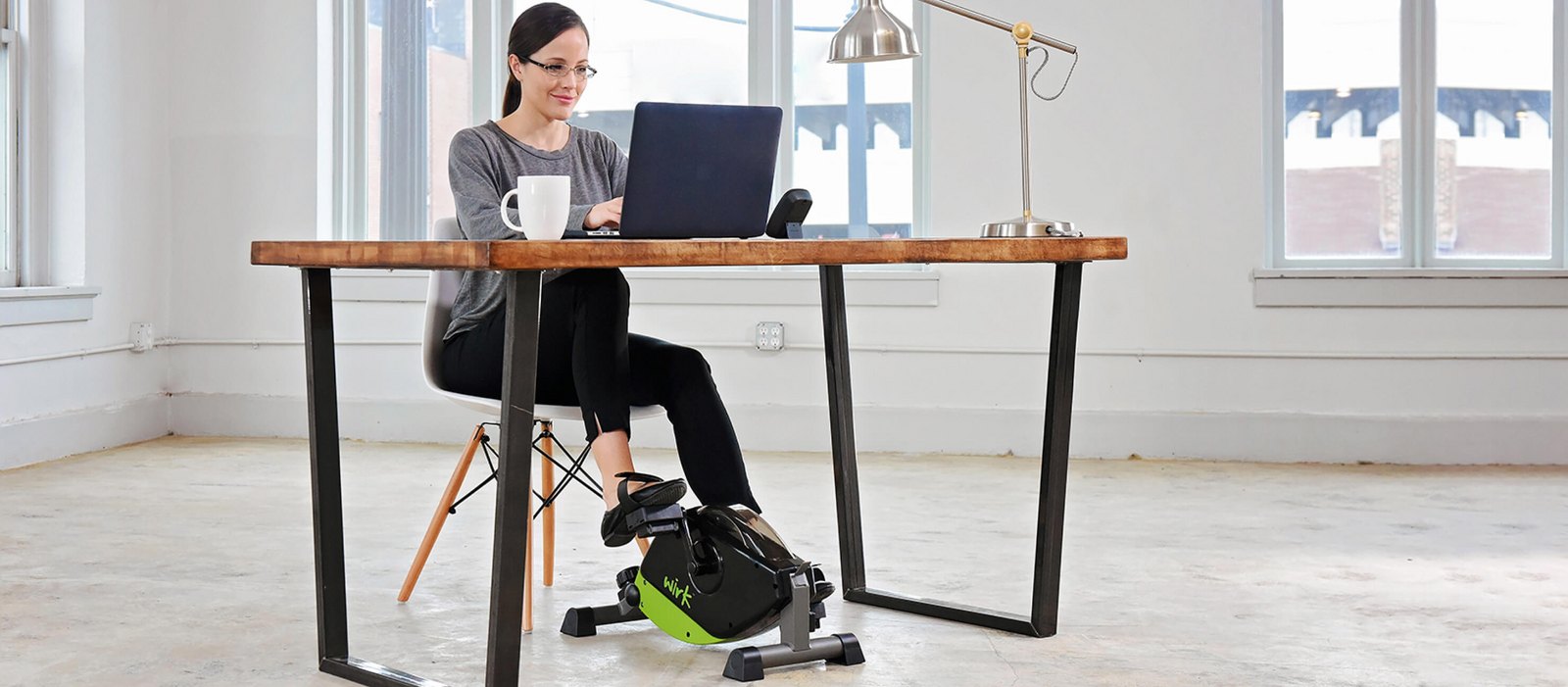
You know the feeling: it's 3 p.m., you've been parked in the same chair since morning, and your legs have that heavy, restless buzz that coffee doesn't fix. Standing up for a "real workout" means changing clothes, clearing floor space, and spending willpower you were saving for actual work. So mostly, the legs stay still — and the buzz becomes your normal.
Now picture the same 3 p.m. with one small change. Under your desk, your feet have been turning smooth, silent circles since the standup meeting. Your knees clear the desk edge by an inch. Your chair hasn't rolled backward once. You finish the day with legs that feel used instead of embalmed, and you never left your chair, changed your clothes, or made a single decision about "fitting in a workout." For apartment-based desk workers, the best under-desk pedal exerciser isn't really exercise equipment. It's an eight-hour background habit.
It also slots straight into the posture side of this site: gentle all-day leg movement pairs naturally with the desk breaks in our posture correction guide. And if you're designing the whole room around work-plus-training, see our home office gym combo layouts.
Affiliate placeholder note: links marked “Check current price” currently point to placeholder routes while our affiliate accounts are being set up. The picks, fit measurements, and price ranges below are real editorial content — see our affiliate disclosure for how we keep money out of the rankings.
The two setups worth considering
App-connected under-desk elliptical
Typical street price: $249–$349
- Long, flat elliptical stride — the easiest on taller knees
- Whisper-quiet magnetic drive; app tracks time, distance, strides
- Built like furniture, priced like it too
Lovely if the budget is there and you'll pedal daily for years. For everyone else, read the smart pick before spending double.
Low-profile magnetic mini bike
Typical street price: $99–$199
- Magnetic resistance: silent, smooth, nothing to wear out
- Lowest pedal height in the business — fits under more desks
- 8 resistance levels cover "barely moving" to "actually working"
Once you've seen the premium tier, this is the number that makes sense — and it's where our Best overall pick lives.
Check current priceMost major retailers offer easy returns — check the listing before you buy.
Fit first: three measurements before you shop
- Desk underside height. Measure from floor to the lowest point under your desk (watch for crossbars and cable trays). Most desks give you 24–29 inches. Your knees rise above the pedals at the top of each stroke, so the unit's pedal height plus your leg's arc must clear it. Low-profile magnetic bikes sit around 9–11 inches tall at the pedal axle; ellipticals run lower and flatter.
- Your seated knee arc. Sit in your chair, feet flat, and have a look at how high your knees travel when you mimic pedaling. Longer legs = higher arc = elliptical stride or the lowest bike you can find.
- Floor and chair behavior. On hard floors, light pedal units can creep forward and push rolling chairs backward. Budget for a mat underneath (most people already own one) or choose a unit heavy enough to stay put — roughly 20+ lb behaves much better than 10 lb.
Pedal bike or elliptical? The honest split
Mini pedal bikes use a circular stroke: simpler, smaller, cheaper, and the circular motion mimics a bike. The trade-off is knee height at the top of the circle. Under-desk ellipticals use a flat, elongated stride: pricier and longer, but your knees stay low and the motion is gentler for all-day use. If your desk clearance is tight or your legs are long, elliptical. If budget and storage are tight, magnetic mini bike. Friction (non-magnetic) budget pedals under ~$60 are the false economy here — they're the ones that squeak, wobble, and end up in the donation pile.
The picks, compared
Prices are typical street-price ranges across major retailers; they drift with sales, so treat the links as "check," not gospel.
| Model (category) | Type | Typical price | Noise | Best for | |
|---|---|---|---|---|---|
| Best overallDeskCycle 2 (class) | Magnetic mini bike | $179–$219 | Very quiet | Most desks; lowest fit | Check current price Easy returns at most major retailers — check the listing. |
| Cubii JR2 (class) | Under-desk elliptical | $179–$249 | Very quiet | Long legs, tight clearance | Check current price Easy returns at most major retailers — check the listing. |
| Cubii Pro (class) | Elliptical + app | $249–$349 | Very quiet | Tracking and shared stats | Check current price Easy returns at most major retailers — check the listing. |
| Sunny Magnetic Mini Bike (SF-B020026 class) | Magnetic mini bike | $99–$139 | Quiet | Value pick | Check current price Easy returns at most major retailers — check the listing. |
| Stamina InMotion Compact Strider (class) | Elliptical strider | $99–$149 | Moderate | Budget elliptical feel | Check current price Easy returns at most major retailers — check the listing. |
| Vaunn Medical Pedal Exerciser (class) | Friction pedal | $35–$55 | Can squeak over time | Trial runs; rehab-style motion | Check current price Easy returns at most major retailers — check the listing. |
Best overall: DeskCycle 2 (class)
Picture your first full workday with it: you pedal through two meetings and a long document review, and the only person who notices is you — at 5 p.m., when your legs feel pleasantly awake instead of buzzing. This class of low-profile magnetic bike is the one we point most apartment workers to because it solves the three real problems at once: it fits under standard desks (the pedal profile stays low), it's genuinely quiet on calls (magnetic resistance has no friction pad to squeak), and it's heavy enough not to wander. The honest cons: the display is basic, the circular stroke still needs the knee clearance check above, and at the top resistance levels you'll feel it — which, to be fair, is the point.
Pros: lowest pedal height; silent magnetic drive; stable at ~24 lb; 8 resistance levels. Cons: premium price within the bike class; basic display.
Check current priceMost major retailers offer easy returns — check the listing before you buy.
Best for long legs: the under-desk elliptical (Cubii class)
If the knee-arc test says a circular stroke will bang your desk, the flat elliptical stride is your answer. Cubii-class units glide rather than circle, keep knees low, and the connected models turn the habit into streaks and stats — which genuinely helps some people stay consistent. Cons: longer footprint (measure your under-desk depth), higher price, and you'll want a mat on hard floors.
Pros: flattest knee path; very quiet; app motivation on connected models. Cons: price; longer unit; can drift without a mat.
Check current priceMost major retailers offer easy returns — check the listing before you buy.
The budget reality check
The Sunny-class magnetic mini bike at $99–$139 is the smart-budget sweet spot: magnetic (so, quiet), light enough to move, honest resistance. Below that, friction pedals in the $35–$55 range are fine for a two-week trial of the habit — just go in knowing they squeak and wobble their way out of most routines. If the trial sticks, the magnetic upgrade is the real purchase.
The 14-day habit install (how people actually keep these)
- Days 1–3: pedal only during one recurring meeting, lowest resistance. You're installing a cue, not training.
- Days 4–10: add a second daily block; nudge resistance up one click when it feels invisible.
- Days 11–14: pedal during your lowest-energy hour (usually 2–4 p.m.) and notice what it does to the afternoon slump.
- Pair it: every pedal block ends with 60 seconds of the neck-and-shoulder reset from our desk worker neck routine. Movement loves company.
Under-desk pedal FAQ
Will my knees hit the desk?
That depends on your desk's underside height and your leg length, which is why we give you the three measurements above. As a rough guide, low-profile magnetic bikes at their lowest settings fit most standard 28–30 inch desks for average-height users. Taller users or lower desks usually do better with an elliptical's flatter stride. Measure before you buy — it takes two minutes.
Is it loud on video calls?
Magnetic units, no — there's no friction pad, so at easy-to-moderate resistance they're quieter than a keyboard. Friction pedals can develop squeaks over time. If your job is wall-to-wall calls, magnetic is the safe class.
Does pedaling all day actually do anything?
It's light movement, not a workout replacement — and that's the honest framing. Hours of gentle pedaling breaks up the total stillness of desk work, which is the part that leaves legs buzzing and energy flat by 3 p.m. Think of it as the background layer; your real training still lives in our strength and posture guides.
Pedal bike or elliptical — which should I buy?
Elliptical if your desk clearance is tight, your legs are long, or you want the gentlest all-day motion. Magnetic mini bike if budget and storage matter more and your knee arc clears the desk. Both beat friction pedals for anything beyond a short trial.
Will it push my chair backward?
It can, on hard floors with light units and wheeled chairs. A mat under the unit (and optionally under the chair's front wheels) fixes it in most setups. Heavier magnetic bikes around 20+ lb also stay put far better.
Health note: General fitness and wellness information for healthy adults, not medical advice. Under-desk pedaling is gentle movement; build time and resistance gradually. If you have knee, hip, circulation, or post-surgical concerns, check with a qualified professional before using a pedal exerciser, and stop if you feel sharp pain, numbness, or dizziness.
Building the whole desk-day routine? Get the Starter Checklist.
The pedal is one layer. The checklist lays out the full apartment system — gear order, posture layer, and the buy-nothing-first steps — on one printable page. See what's inside.
One short email. No spam, no list-selling, unsubscribe anytime.

Written by Alex Rivera
Alex is an editor-reviewed persona created for Tiny Apartment Gym. Fit measurements come from manufacturer spec sheets; noise and stability notes reflect aggregated owner reports. We rank by fit and silence first — the two things that decide whether a pedal gets used. How we handle affiliate links.