How to Reduce Workout Noise in an Apartment (Without Giving Up Training)
The knock on the ceiling never comes as a surprise — you felt the thud through your own feet first. The good news: apartment workout noise is physics, and physics has levers. Here are the twelve fixes that matter, in the order we'd install them.
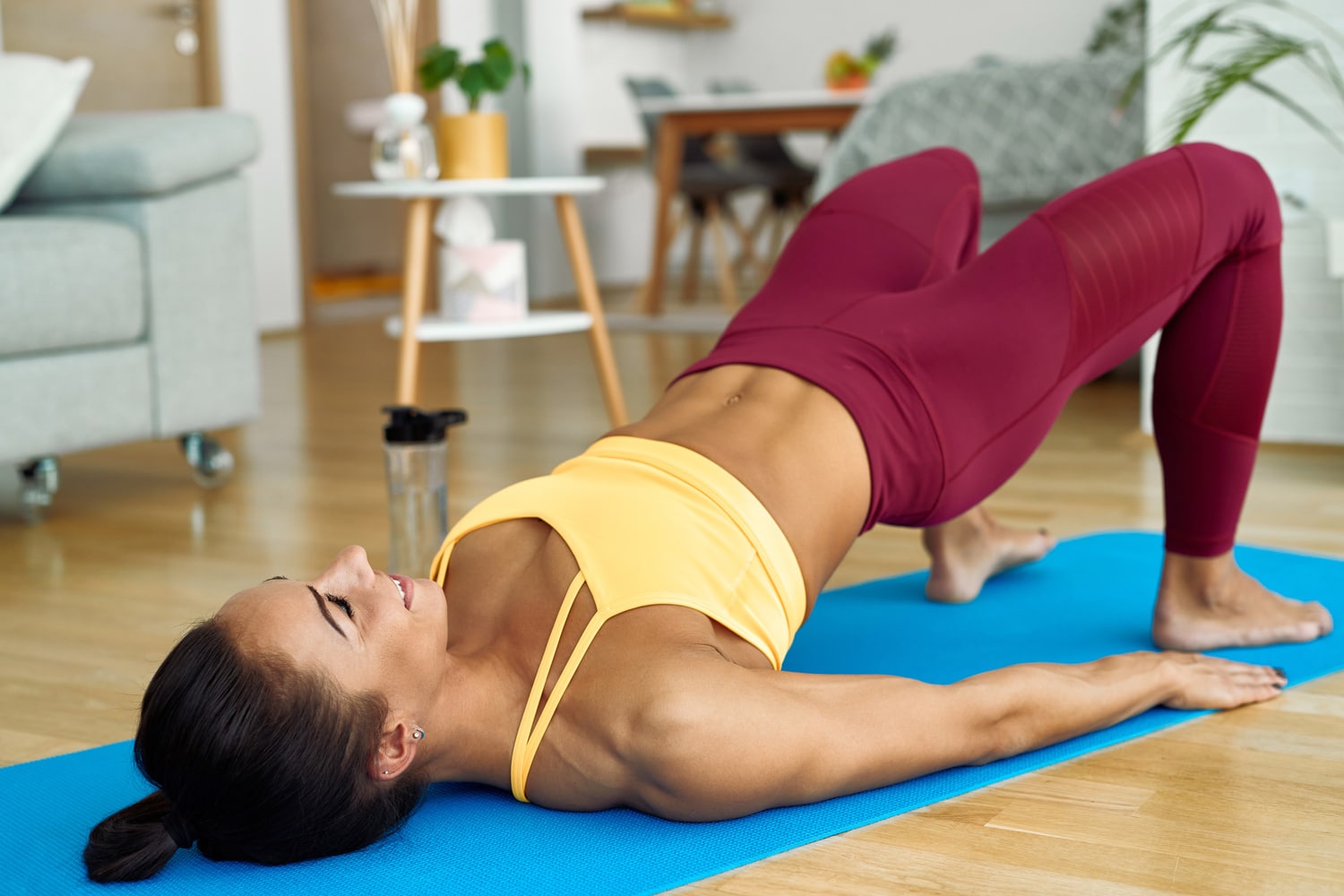
If you're reading this, there's a decent chance it's because of a sound you made — a dumbbell set down a little too fast, a landing a little too heavy — followed by that half-second of frozen listening. Did they hear that? Apartment training carries a unique tax: you're not just managing your workout, you're managing your awareness of the person living six inches below your floor. It wears on you. Some people quietly quit training at home altogether rather than live with the worry.
Now picture the other version. It's early, the building is silent, and you're mid-workout in socks on a thick mat over a rug. Every rep is slow enough to feel polite. Weights are set down like you're placing them on a sleeping baby's blanket. You finish, slightly out of breath, and the loudest sound in the last twenty minutes was your own breathing. That version isn't a fantasy — it's a system, and once you understand where apartment noise actually comes from, it's a system you can build in an afternoon for the price of a good mat.
This is the deep-dive companion to Step 2 of our tiny apartment home gym guide — the apartment noise rules. If you want the ready-made quiet program that follows those rules, go straight to our silent apartment workouts library after this.
First, the physics: two kinds of noise, two different fixes
Almost every "my neighbor hears everything" problem is one of these, and they respond to opposite treatments:
- Impact (structure-borne) noise is vibration traveling through the floor itself: dropped weights, jumping landings, heavy heel strikes, a rack or bench leg tapping. This is the sound your downstairs neighbor feels in their ceiling as a thud — and it's the one that generates complaints, because it bypasses their walls entirely and arrives through the building's bones.
- Airborne noise is sound traveling through air: music, video instructors shouting, clanking plates, your own breathing and grunting to a lesser extent. This one is mostly handled by volume knobs, headphones, and ordinary courtesy.
Here's the liberating part: impact noise is almost entirely behavioral. It comes from things leaving the floor and coming back, or being set down hard. Control that, and you've solved the 90% case. Everything below follows from that one idea.
The quiet stack (install in this order)
- Layer 1 — Behavior: nothing leaves the floor; nothing is dropped; every rep is controlled. Free, immediate, biggest impact.
- Layer 2 — Surface: a thick mat (6–15 mm), ideally over a rug or carpet, spreads and absorbs what vibration remains.
- Layer 3 — Placement & timing: train over the room's most supported area where you can, and keep louder work inside reasonable hours.
The 12 fixes
Movement fixes (the big five)
- 1. No jumping — swap, don't stop. Every jump has a quiet twin that trains the same muscles: burpees become walk-outs, jump squats become fast sit-to-stands, box jumps become step-ups, jumping jacks become step-jacks. Our beginner plan is built entirely on this swap list.
- 2. Nothing leaves the floor. Choose exercises where a foot, knee, or your back stays planted: glute bridges, dead bugs, split squats with a held support, slow mountain climbers with sliding or marching feet. If a movement requires flight, it requires a different apartment.
- 3. Slow the landing you don't have. Any step-down, lunge return, or step-up should land toe-first and silent. Practice the "ninja test": if you can hear your own foot land, your neighbor can too.
- 4. Set weights down under control — always. The last two inches of every set-down are where thuds are born. Lower dumbbells to the mat, don't release them onto it. Between sets, weights rest on the mat, never on bare floor.
- 5. Kill the clank. Adjustable dumbbells and plates get set down flat, not tipped onto their edges; keep a towel between stored weights; tighten any loose bench hardware monthly — rattles telegraph through floors surprisingly well.
Setup fixes
- 6. Buy thickness, not just a mat. A 6 mm yoga mat is for yoga. For apartment strength work, 8–15 mm of dense foam (or a 24 sq ft puzzle-mat platform) meaningfully absorbs impact. Thicker and denser beats bigger and squishy.
- 7. Mat over rug beats mat over hardwood. If you have a rug, train on it with the mat on top — the stack absorbs far more than either layer alone. Bare hardwood is the worst-case surface; never train heavy on it.
- 8. Train on the most supported floor you have. Where layout allows, put your training corner near load-bearing walls rather than mid-room, and away from the spot directly above your neighbor's bed if you know it. You won't always know — Layer 1 and 2 matter more — but take the free wins.
- 9. Socks or soft shoes. Hard-soled shoes broadcast heel strikes. Socks on a grippy mat, or soft trainers, keep footfalls quiet and improve floor feel for balance work.
- 10. Silence the furniture. A bench, rack, or pedal bike gets rubber feet checked, bolts snugged, and a position fully on the mat. A bench leg half-on, half-off the mat will tick against the floor all session.
Social fixes (the underrated two)
- 11. Pick considerate hours, then relax. Most buildings think in terms of roughly 8 a.m.–9 or 10 p.m. Inside those hours, a quiet workout is a reasonable use of your home. Outside them, keep it to the truly silent menu — floor work, bands, mobility — or wait. (Your lease and local rules govern; this is courtesy, not legal advice.)
- 12. Say something before there's a problem. A thirty-second introduction beats any product: "Hi, I'm Alex from 4B — I work out at home in the mornings, always on mats, no jumping. If you ever hear anything, knock and I'll adjust." Neighbors who have a face and a channel almost never become complainants. And if a knock ever does come, apologize, adjust the exercise, and log what caused it. One data point fixes the program.
What "quiet" actually means, in decibel terms
A note of honesty about numbers: exact decibel ratings for home workouts barely exist, because noise through a floor depends on your building's construction more than on your equipment. What transfers across buildings is the comparison. Ordinary conversation sits around 60 dB in the room where it happens; a vacuum cleaner is considerably louder; a dropped dumbbell on hardwood is a short, sharp impact peak that carries through structure far out of proportion to how it sounds to you. Manufacturers who quote "under 50 dB" for magnetic bikes are describing in-room airborne sound at a set distance — useful for comparing machines, meaningless as a promise about your neighbor's ceiling. Shop the mechanism (magnetic, belt-driven) and control the behavior; don't shop the decibel sticker. For machine-by-machine guidance, see our quiet cardio equipment roundup.
When the workout itself is the problem
Sometimes the fix isn't a product at all — it's the program. If your current routine is built on plyometrics, dropping weights, or a treadmill (the single loudest common home-gym item, through vibration rather than sound), no mat stack will save it. Rebuild around the silent menu: controlled strength work, bands, floor-based conditioning, and machines designed to be quiet. Between our silent workouts library and the pillar guide's weekly plan, you can train hard for months without a single jump or drop. Quiet is a programming choice first and a shopping list second.
Apartment workout noise FAQ
What is the loudest thing in a typical apartment workout?
Impacts: dropped or hard-set weights, and jump landings. Both send vibration directly through the floor structure. A treadmill is the loudest common machine for the same reason — continuous foot-strike vibration. Remove impacts and the problem mostly disappears, which is why our entire program is built on "nothing leaves the floor, nothing is dropped."
How thick should my mat be for downstairs neighbors?
For strength work, 8–15 mm of dense mat is the practical range, ideally over a rug or carpet. Puzzle-mat platforms of 1/2 to 1 inch are the heavy-duty option under benches and dumbbell corners. Thickness helps with impact, but behavior — controlled set-downs, no jumps — does most of the work.
Can I work out early in the morning in an apartment?
Yes, if the workout is genuinely silent: floor-based strength, bands, mobility, and controlled movements on a mat. Keep anything with impact inside reasonable hours (roughly 8 a.m. onward is a common courtesy line), follow your building's quiet-hours rules, and when in doubt, introduce yourself to the neighbor below before there's ever a complaint.
Do "quiet" exercise machines really stay quiet for the floor below?
Magnetic-resistance machines (bikes, ellipticals, rowers) are quiet in the room and transmit very little vibration when placed on a mat — they're the only cardio machines we'd recommend upstairs. Air rowers and treadmills are the exceptions to avoid. See our quiet cardio roundup for specifics.
Health note: General fitness information for healthy adults, not medical advice. Quiet substitutions change impact, not effort — keep the same form standards as the original movements, build up gradually, and stop if anything feels sharp or wrong. Building rules and leases vary; nothing here is legal advice about your specific tenancy.
The quiet system, on one page. Free.
The Starter Checklist includes the silent-training rules, the mat-and-gear buy order, and the weekly structure — printable, landlord-safe. See what's inside the checklist.
One short email. No spam, no list-selling, unsubscribe anytime.

Written by Alex Rivera
Alex is an editor-reviewed persona created for Tiny Apartment Gym. The noise guidance here follows building-acoustics basics — impact vs airborne sound — and is deliberately free of invented decibel claims. Your building's construction will always be the biggest variable.